


How do you know when weekly therapy is no longer enough for what you are working through? It often shows up as slow or interrupted progress, where sessions feel too far apart or unfinished before the work can fully settle.
EMDR intensives are extended sessions delivered over a concentrated period of time instead of weekly 50-minute appointments. This approach can help when deeper processing is needed for grief, trauma, or distressing memories, especially when weekly therapy starts to feel too spread out.
This does not mean EMDR therapy is not helping. It may point to a need for a more focused structure, especially for those seeking care in Alabama. Here are the signs you’d benefit from EMDR intensives.
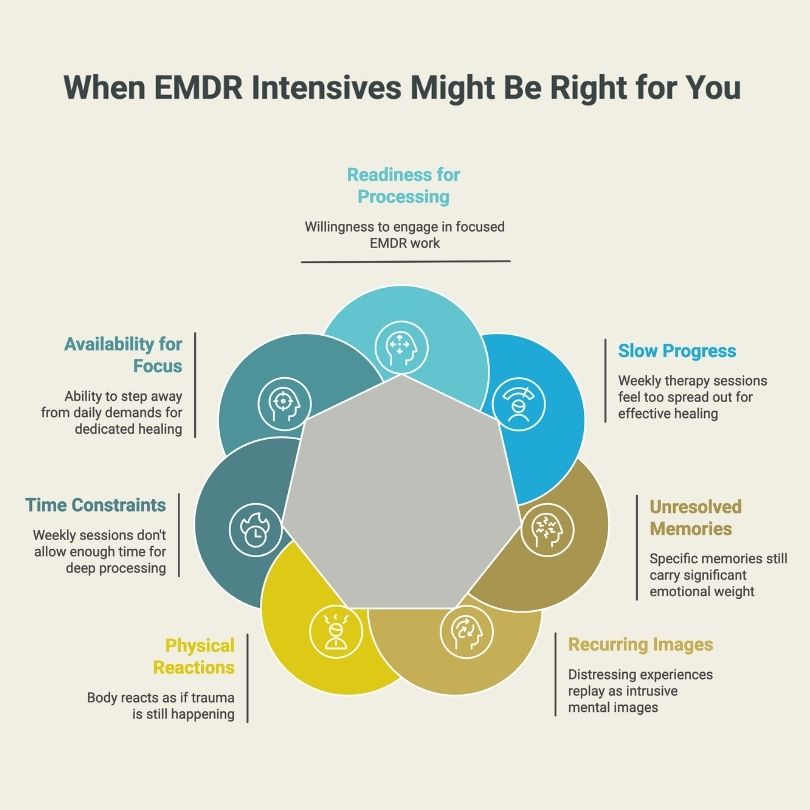
1. Weekly therapy feels too spread out for the work you need

When there are several days between sessions, it can be harder to stay connected to the progress you started.
You might begin to open something important in one session, then return to daily life before it has been fully processed. By the time the next session comes, the momentum can feel lost, and you may need to spend time finding your way back to the same place.
An EMDR intensive allows you to stay with the same memory or experience for several hours in a single day, so the work can move forward without being interrupted or paused in the middle. Research suggests this continuity can support stronger engagement than weekly sessions.
2. You know which memories still feel unresolved

You may benefit from EMDR intensives if you can clearly identify memories that still carry emotional weight.
You might think about a particular conversation, event, or loss and notice that the feeling does not settle the way you expect. Even after time has passed, the memory still feels unfinished or heavier than it should.
EMDR intensives stay focused on that identified memory long enough for your brain to process it more fully, so it begins to feel more settled and less emotionally charged when you think about it.
3. A loss or trauma keeps replaying in specific images or moments

Recurring images or mental loops are a common sign that your brain has not fully processed a distressing experience.
You might suddenly see a specific image, hear words in your mind, or feel pulled back into a moment without warning. These experiences can happen several times a week or even within the same day, especially when something reminds you of it.
EMDR intensives create space to process these images in longer sessions, helping reduce their frequency and emotional charge.
4. Your body still reacts like the event is happening now

Physical reactions to past experiences can indicate that trauma is still stored in the body.
A reminder can lead to a rapid heartbeat, muscle tension, or a sudden sense of panic that lasts for several minutes. These reactions can feel out of proportion to what is happening in the moment.
EMDR intensives help your nervous system process these stuck responses so your body no longer reacts as if the danger is still happening. Studies show EMDR can lower emotional distress and change how the memory is stored, helping the body recognize safety again.
5. You need more time than a weekly session allows

Some therapeutic work requires extended time to feel complete within a single session.
In a standard 50-minute appointment, it can be difficult to fully access, process, and stabilize after engaging with difficult material. This can leave sessions feeling unfinished or emotionally open.
EMDR intensives typically provide 3 to 6 hours of structured therapy per day, allowing time for preparation, processing, and grounding within the same session.
6. You can step away from daily demands for deeper work

EMDR intensives require a temporary pause from daily responsibilities to allow focused healing.
Many intensive formats take place over 2 to 5 consecutive days, which means stepping away from work, roles, or daily routines. This dedicated time allows you to stay engaged in the process without the usual interruptions that can pull your attention away.
EMDR intensives can also be done as a retreat away from your everyday environment, creating a separate space where you can focus fully on the work without ongoing demands or distractions.
7. You feel ready to prepare for focused EMDR processing
Readiness is one of the most important indicators that an EMDR intensive may be appropriate.
This does not mean feeling fully confident or without hesitation. It often means recognizing that something needs attention and feeling open to working through it with support.
EMDR intensives include preparation as part of the process, helping you build enough stability before moving into deeper work so the experience feels supported, contained, and manageable as you move through it.
Talk through EMDR intensive options in Alabama
If several of these signs feel familiar, it may reflect that your current pace of therapy is not matching the depth of what needs to be processed.
EMDR intensives provide a structured way to stay with the work long enough for more complete processing, through extended sessions or a focused retreat away from daily demands. This approach can support deeper shifts in a shorter period of time, especially when specific memories or reactions continue to feel unresolved.
If you’re ready to take that next step, Book a Free Consultation to talk through your options.
Frequently asked questions
How long is an EMDR intensive?
An EMDR intensive typically runs over 2 to 5 consecutive days or as extended sessions across a shorter timeframe. The structure is designed to maintain continuity, allowing deeper processing without the repeated stopping points that can slow progress in weekly therapy.
Can EMDR intensives be done online?
Yes, EMDR intensives can be done online when appropriate and clinically safe. Virtual formats use guided bilateral stimulation and structured support, allowing you to engage in focused processing from home while still maintaining the depth and continuity needed for intensive work.
How much is an EMDR intensive?
The cost depends on the length, structure, and level of support included. Multi-day intensives are higher than standard sessions due to the extended, focused work. In the long run, intensives can be more cost-effective because the therapy is concentrated and highly focused.
Does insurance cover EMDR intensives?
EMDR intensives are not covered by insurance. A superbill can be provided for possible out-of-network reimbursement, depending on your plan. It is recommended to contact your insurance provider directly to confirm any available mental health benefits.
One thought on “7 Signs You’d Benefit From EMDR Intensives in Alabama”