


EMDR intensives provide extended, focused therapy over a half-day, full-day, or several consecutive days. The process begins with a consultation and intake, then follows a personalized plan that may include preparation, EMDR processing, grounding, breaks, and follow-up planning.
Back Porch Counseling offers EMDR intensives in Huntsville ranging from a half day to two days, along with longer retreat-style options at The Sanctuary near Lake Guntersville. This guide explains how the intensive format differs from weekly therapy and what happens before, during, and after treatment.
How do EMDR intensives differ from weekly therapy?

EMDR intensives reserve more time for treatment. Instead of meeting for a standard weekly session, you work with your therapist for a half day, full day, or across consecutive days.
The underlying EMDR therapy process remains structured. The extended format allows more time for preparation, processing, grounding, and reflection without waiting a full week between sessions.
What does research say about intensive trauma treatment?
EMDR has strong guideline support as a treatment for PTSD. Evidence for intensive formats is more limited, and the research cited here does not evaluate a private, EMDR-only intensive.
A recent uncontrolled study analyzed 73 patients with PTSD who completed a four-day remote program combining EMDR, prolonged exposure, physical activity, and psychoeducation. PTSD symptoms decreased after treatment and remained lower at the six-month follow-up.
Because the study combined several treatments and didn’t include a control group, it cannot show that EMDR alone caused the improvements or predict the outcome of a private EMDR intensive.
What happens before your EMDR intensive

A consultation and intake come first. These steps help determine if an intensive is appropriate and which format may best fit your needs.
Consultation, intake, and treatment goals
You can begin with a free 20-minute consultation to ask questions and discuss what you hope to address. After deciding to move forward, a 90-minute intake provides time to review your history, current concerns, coping resources, and treatment goals.
You won’t necessarily need to describe every detail of a distressing experience. The intake provides the information needed to assess readiness, identify possible treatment targets, and plan the intensive carefully.
You may also practice grounding or emotional regulation skills before beginning focused processing.
Choosing the schedule and setting
The length and location of your intensive will depend on your goals and clinical needs.
Shorter EMDR intensives, ranging from a half day to two days, may be held at the Huntsville office or The Sanctuary. Longer intensives, generally lasting two to five days, are available at The Sanctuary near Lake Guntersville.
Grief-focused retreats at The Sanctuary typically last two to three days. The schedule is discussed during intake rather than selected through a one-size-fits-all package.
What to expect during an EMDR intensive
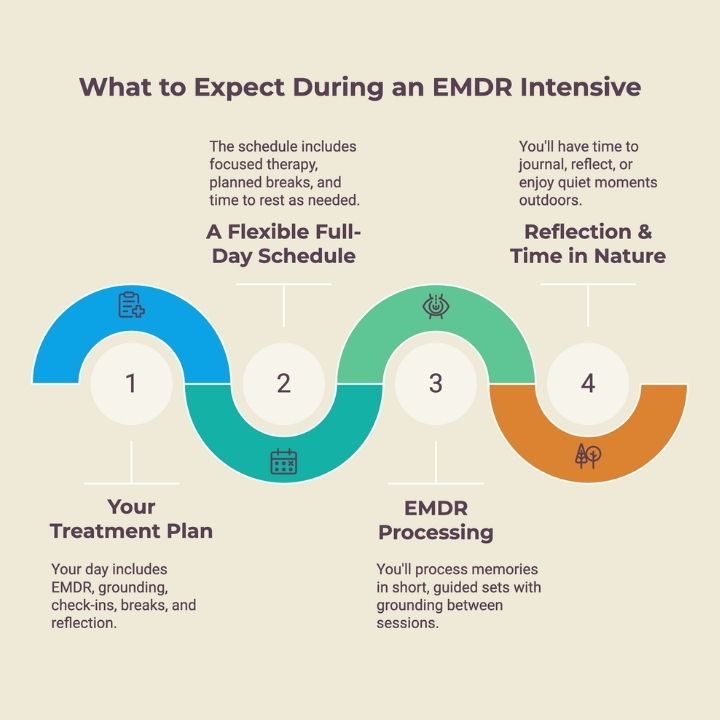
An EMDR intensive combines focused therapy with regular opportunities to pause, ground, and reset.
Depending on your treatment plan, the intensive may include:
- Reviewing your goals, readiness, and current level of distress
- EMDR processing in short, guided sets
- Grounding, check-ins, and emotional regulation
- Planned breaks and time for lunch
- Journaling, creative activities, remembrance work, or time in nature
Not every intensive includes every element. The structure is adjusted around your needs and responses throughout the day.
A flexible full-day schedule
For retreat-style intensives, a typical day begins around 9 a.m., includes an hour for lunch around noon, and ends around 4 p.m. Breaks are taken as needed, and the amount of active therapy time may vary.
The schedule remains flexible. More time can be added for settling, reflecting, or simply taking a breath when needed.
EMDR processing, grounding, and breaks
During EMDR processing, you briefly bring an upsetting memory and its related thoughts, emotions, or physical sensations to mind. At the same time, you attend to bilateral stimulation, such as side-to-side eye movements, tapping, or alternating tones.
Processing happens in short sets. Between sets, the therapist pauses to ask what you notice, assess your distress, and help you remain connected to the present.
The goal is to reduce the distress and unhelpful beliefs associated with the memory, not erase the memory itself. Researchers continue to study exactly how EMDR produces change.
Reflection and time in nature
At The Sanctuary, your treatment plan may include quiet reflection, creative activities, remembrance work, or time outdoors.
You may have space to journal, sit on the porch with coffee or tea, or rest while looking out over the woods. These moments provide a gentler transition between periods of focused clinical work.
What happens after an EMDR intensive?

Before the intensive ends, you and Jan can review what you noticed, use grounding strategies, and discuss possible next steps.
Focusing on distressing memories can feel uncomfortable, so it may help to leave room for rest afterward. Ask which reactions to watch for, which grounding strategies to use, and when to reach out for additional support.
Optional follow-up session
A 50-minute follow-up session is available if desired. This appointment can be used to review changes in symptoms, discuss how the work is affecting daily life, and decide if additional treatment would be helpful.
Continuing therapy when needed
An intensive doesn’t automatically replace ongoing therapy. Some people may not need immediate continued treatment, while others benefit from regular counseling afterward.
Ongoing support may be especially helpful when someone is navigating prolonged grief, multiple losses, complex trauma, or continuing life stress. The appropriate next step should be based on clinical needs rather than a preset timeline.
Is an EMDR intensive right for you?

An EMDR intensive may be worth considering if you prefer extended treatment time, have a specific concern you want to address, or find weekly sessions difficult to schedule.
It may also appeal to people who want fewer interruptions between preparation, processing, and reflection. You can explore additional signs that an EMDR intensive may fit your needs before scheduling a consultation.
However, an intensive isn’t appropriate for everyone. Some people need additional stabilization, preparation, or support before beginning extended trauma-focused work.
EMDR has its strongest research support for PTSD. Clinicians may also use it for grief-related distress and other disturbing life experiences when appropriate, but the strength of evidence varies by condition. An intake is necessary to determine if EMDR and an intensive format fit your circumstances.
Talk with Back Porch Counseling about an EMDR intensive
Jan Owen, LPC, NCC is trained and certified in EMDR and has specialized training and certification in bereavement and life-transition counseling.
During the consultation, you can discuss weekly EMDR therapy, a shorter intensive in Huntsville, or a retreat-style experience at The Sanctuary. Reaching out doesn’t commit you to treatment.
You can request a free 20-minute consultation to ask questions and discuss how an EMDR intensive may fit your needs.
Frequently asked questions
How do EMDR intensives work?
EMDR intensives extend treatment beyond a standard weekly session. They may last a half day, full day, or multiple consecutive days, with processing, grounding, breaks, and reflection built into the schedule.
Are EMDR intensives safe?
EMDR intensives can be appropriate for carefully screened clients, but they aren’t risk-free or suitable for everyone. Trauma-focused work may cause emotional discomfort during or after treatment, making intake, preparation, pacing, and grounding essential.
How long does an EMDR intensive last?
At Back Porch Counseling, shorter EMDR intensives range from a half day to two days, while longer intensives generally last two to five days. Grief-focused retreats typically last two to three days, with a typical full day running from about 9 a.m. to 4 p.m.
How should I prepare for an EMDR intensive?
Complete the intake honestly, discuss your concerns and goals, and practice any grounding skills provided by your therapist. Arrange meals, transportation, and a lighter schedule after the intensive when possible.
What should I avoid after an EMDR intensive?
There’s no universal list of activities everyone must avoid. Follow your therapist’s aftercare plan, keep the rest of your day light when possible, and avoid driving if distress or fatigue makes it unsafe.